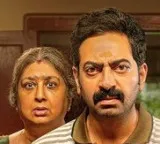
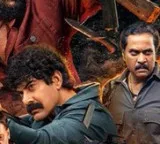
Nani has long been seen as the relatable boy-next-door — a familiar face whom family audiences feel comfortable watching on the big screen. Over the years, audiences have developed considerable trust in his choice of stories and characters. This time, Nani attempts something very different with The Paradise. The film reunites him with director Srikanth Odela, who earlier delivered Dasara with him. The Paradise released in theatres on September 24, 2026.
Plot
The story is set in the 1980s in Paradise, in the Secunderabad/Hyderabad region, where members of a nomadic community live without proper recognition or identity. With a population of around 5,000, they feel that even though the country has attained Independence, true freedom has still not reached them.
They struggle under the oppressive rule of Shikanja Maalik (Mohan Babu), living almost like slaves. Sammakka (Sonali Kulkarni) is the first woman from the community to raise her voice demanding recognition for her people. Jadal (Nani) is her son.
For certain reasons, Jadal develops anger and hatred towards his mother. A tattoo forced onto his hand by Shikanja Maalik constantly reminds him of that bitterness. After serving 14 years in prison, Jadal is released and returns to Paradise with the intention of settling scores with Shikanja Maalik.
By then, Shikanja's son Vikram Malik (Raghav Juyal) is trying to enter politics. Jadal soon realises that Vikram is even more ruthless than his father.
Although Jadal continues to distance himself from his mother after returning to Paradise, he decides to fight for his community. His first objective is to prevent Vikram Malik from entering politics.
Why does Jadal hate his mother? Will he succeed in bringing down Shikanja Maalik? Can he secure recognition for his nomadic community? And how does Subbalakshmi (Kayadu Lohar), who returns from Madras after failing to find opportunities in films, become close to Jadal? These questions form the rest of the story.
Analysis
History has witnessed many communities fighting for recognition, freedom and the right to live with dignity. The Paradise builds its story around one such nomadic community and a dictator determined to keep its people under his control.
At its core, the film is about a son who realises that his mother's struggle failed because there was no powerful leader standing behind her. He eventually takes that responsibility upon himself and emerges as a leader for his community.
Set against the backdrop of the 1980s, the film explores power, arrogance and oppression. Power gives rise to arrogance, while unchecked arrogance eventually turns into brutal oppression. Such oppression, in turn, gives birth to resistance movements. Director Srikanth Odela tries to bring these elements together within a period Secunderabad setting. The film has officially been described as a period action drama set in Secunderabad.
The first half largely revolves around Jadal's internal conflict after misunderstanding his mother. Shikanja Maalik's atrocities also occupy an important part of this section. In the second half, Jadal's misconceptions about his mother are cleared, and he gradually transforms into a leader. His confrontation with the Malik family becomes the focus from there.
The film can therefore be viewed from two angles — as the story of a son taking up arms for his mother's cause and as the story of a leader fighting for recognition for his people.
Both ideas carry the potential for powerful emotions. However, the director fails to establish that emotional connection effectively. Because the pain behind the conflict does not fully reach the audience, the massive action sequences register more for their bloodshed than for the suffering that motivates them.
There are also shortcomings in the way some characters are designed. Just when Jadal is built up as an immensely powerful figure, Shikanja arrives and brutally beats him. Soon after Shikanja himself is presented as a formidable force, Jadal confronts and threatens him. Mohan Babu's character then moves away from the centre of the narrative, making room for the younger villain, but the purpose behind this transition is not convincing enough.
Performances
Mohan Babu's appearance as the villain initially creates excitement, but the film does not sustain that impact for very long.
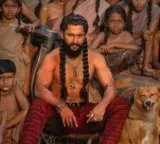
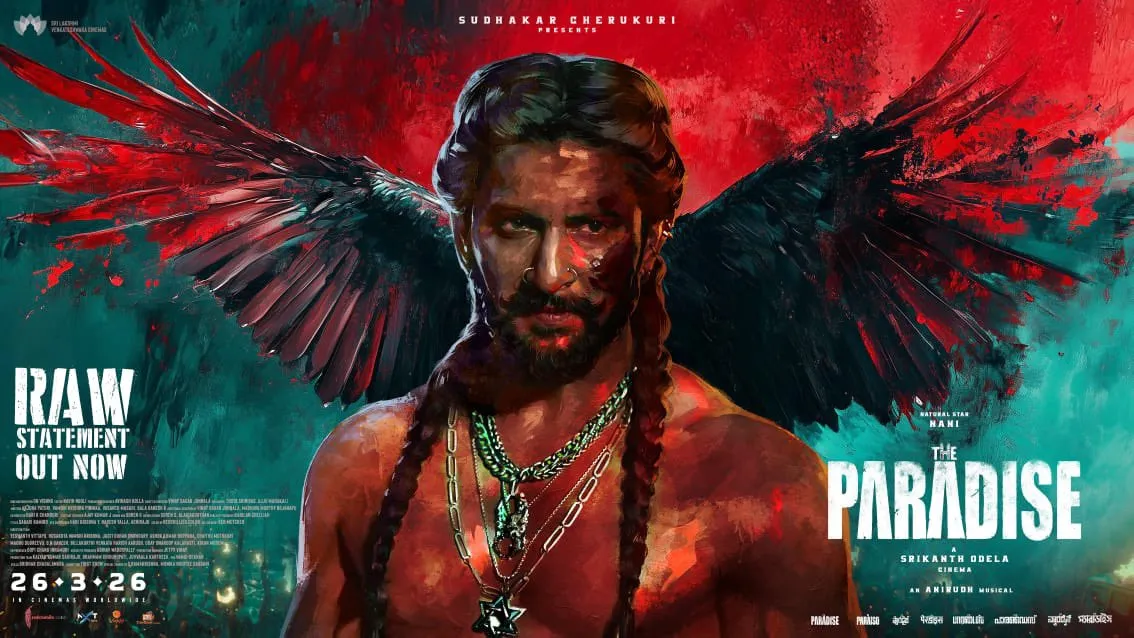
As far as Nani's performance is concerned, he commits himself to a radically different appearance and character. However, his distinctive two-braid hairstyle, particularly during the dance portions, can feel awkward at times.
Kayadu Lohar's Subbalakshmi and her mother's character add little to the central narrative. Removing them would hardly affect the main story. Sathyaraj's entry also feels like unnecessary commotion rather than a meaningful addition.
Raghav Juyal plays Vikram Malik, while Sampoornesh Babu appears in a supporting role as Biryani. Neither character, however, leaves the kind of impact one might expect from the way the film introduces its world.
The film has no shortage of large-scale action. Limbs and heads are severed repeatedly, and the violence is extremely graphic. People are thrown into fire, subjected to brutal punishment and attacked in gruesome ways. Interestingly, these are not limited to the villain's atrocities; much of this violence is also presented as part of the hero's acts of valour.
One of the curiosities surrounding the film is why Nani's character wears two braids. When the explanation finally comes through his mother's character, it feels rather silly. The eventual revelation concerning the hero's real name also fails to generate the intended impact. By the end, one is left wondering what made Nani choose a story like this.
Technical Aspects
There is little to complain about when it comes to producer Sudhakar Cherukuri's production values. CH Sai's cinematography is impressive and gives the film the required visual scale.
Anirudh Ravichander's music and background score are extremely loud and relentless in several portions. The editing could also have been tighter, as there are scenes that could have been trimmed or removed altogether. A different approach to the climax from the villain's side might have made the final stretch more effective.
Final Verdict
Overall, only a couple of songs and a few individual scenes manage to leave a strong impression. The Paradise attempts to combine a mother's unfinished struggle, a son's transformation into a leader, social oppression and large-scale action. However, the emotional foundation needed to make those elements work does not come through strongly enough.
Rather than feeling like an experiment from Nani, The Paradise ultimately comes across as a risky venture for the actor.
The Paradise Movie Review
Movie Details
Movie Name: The Paradise
Genre: Action, Drama
Release Date: 2026-09-24
Cast: Nani, Mohan Babu, Kayadu Lohar, Sonali Kulkarni, Raghav Juyal
Director: Srikanth Odela
PRO: -
Music: Anirudh Ravichander
Banner: Venkateshwara Cinemas
Review By: Peddinti
Disclaimer:
This review is based on the reviewer’s individual perspective. Audience opinions may vary.
Trailer